💥Reading Tarot is a confusing mess until you learn this -
Number 3 is the step a lot of people don’t bother to do. And when you skip this step, what you have is a bunch of cards talking all at once. And you, as the reader, get confused or overwhelmed.
The question mattersThink about it this way: When you go to the doctor and get face-to-face with that person, they ask: “Why are you here?” You DON’T say: “I don’t know. Why don’t you guess?” ✅So yes, it’s good to come to Tarot with a question. Don’t skip this stepThe next step is the spread. One of the big advantages of Tarot is that you get to craft every spread position to maximize insight. The purpose of the spread is to create lanes for the cards so you know: Otherwise it’s just ten Tarot cards yelling in a mystical group chat. 😄 Crafting your own spread positionsFor example, you could ask a vague question like: “Why am I unhappy?” That’s pretty broad. And why questions are usually not terribly revealing. But then imagine creating spread positions like:
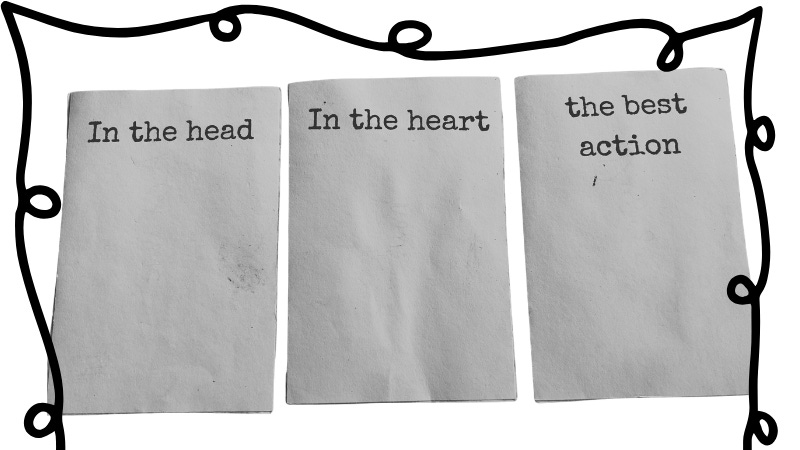
Now suddenly the question has focus and the cards have lanes! The cards you pull might support those positions. ❌They might challenge them. 🖼️They might completely reframe them. And all of that becomes information. Let’s take a closer look👀Back to “Why am I so unhappy?”
In this spread we’re exploring:
Because emotions often shift once energy starts moving again.
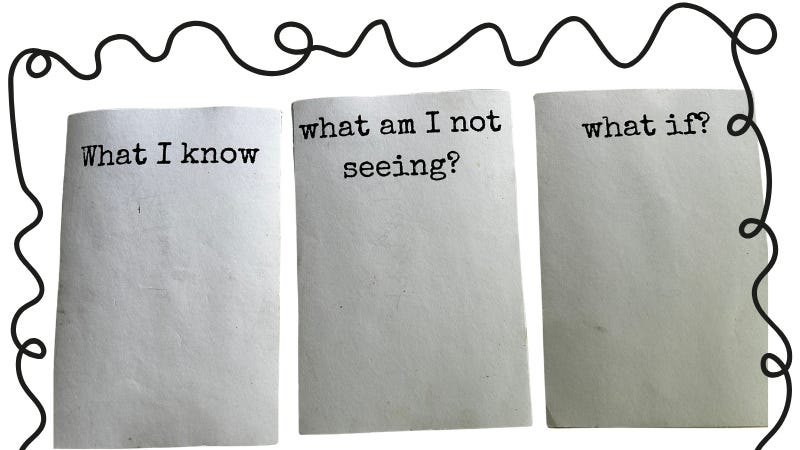
In this spread we’re exploring:
The “What If?” position The final position is a wild card. This gives the cards permission to throw a curveball. Maybe they confirm the story. Or maybe they tell us we’re barking up the wrong tree entirely. 🌳 Sometimes the most valuable insight in a reading is the thing we never would have thought to ask.
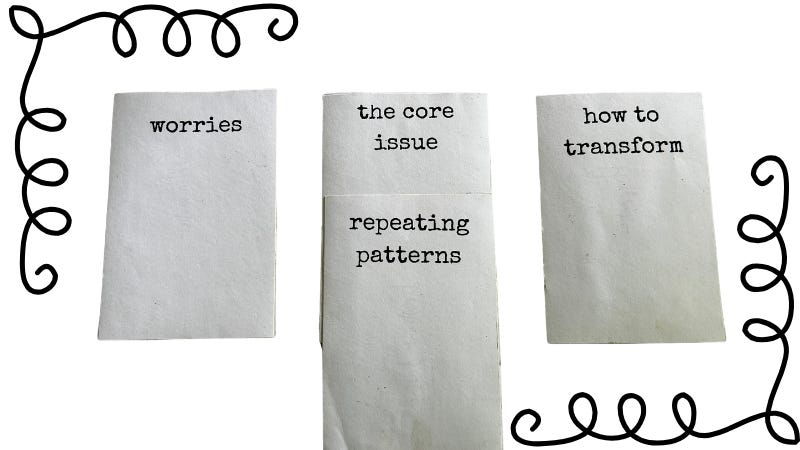
In this spread we already know we are worried about something and we suspect this is what is making us ultimately unhappy. ✅ Worries Maybe you already know you’re anxious, overwhelmed, or mentally spinning. Great. Make that a spread position. Give the worry a lane. ✅ Core Issue / Repeating Pattern What’s underneath the surface emotion? Is there a core issue driving all of this? Is there a repeating pattern keeping the situation alive? You could use one of these positions… or both. ✅ How to Transform the Situation Not just: But: Because insight is powerful, (that’s the WHY), but we need guidance on HOW to create change. Are you digging this? -Cassandra the Card Reader |